Cost guide
Basement Waterproofing Cost in Bucks County, PA
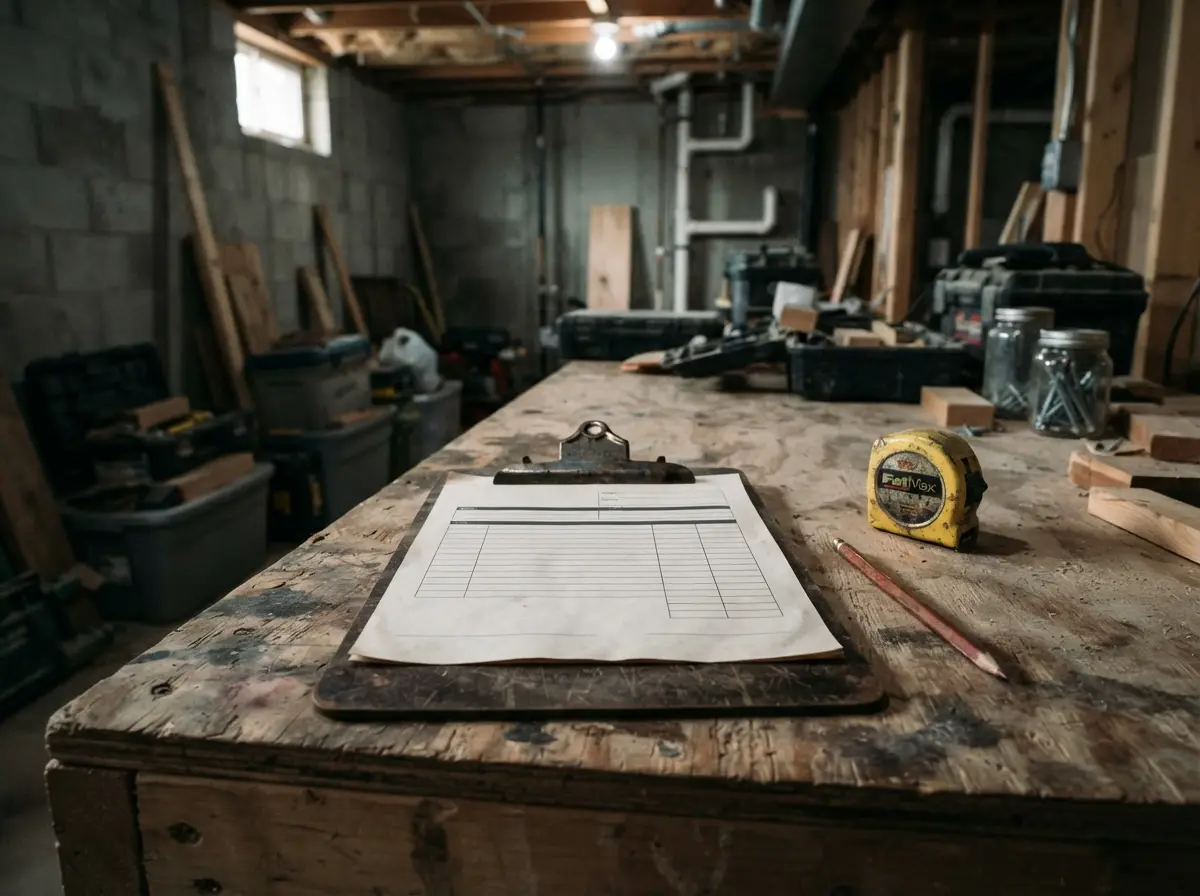
Feet of drain, the pump, each crack and the wall finish in the way set most of the number. The visit measures them and puts each one in writing.
Short answer
What sets a waterproofing price
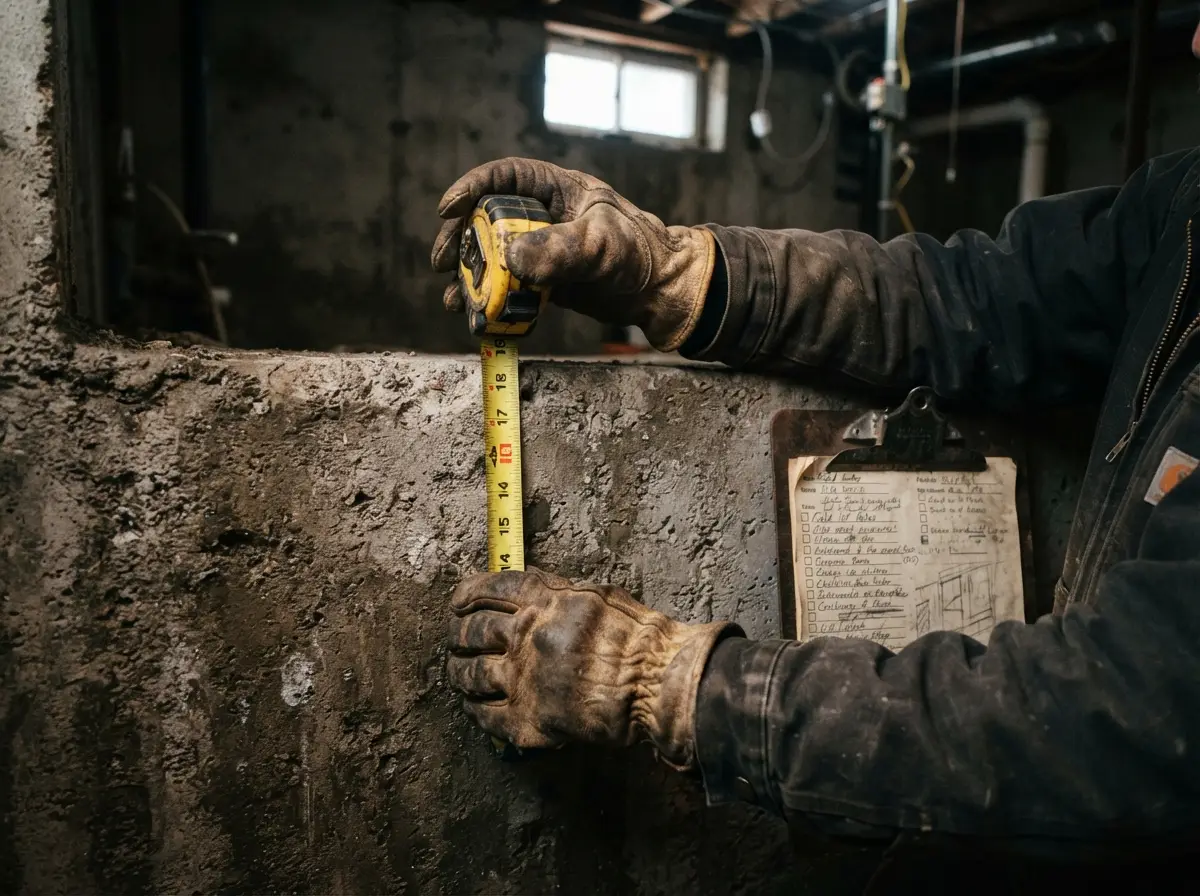
Basement waterproofing in Bucks County is priced job by job, from measurements taken at the house. An interior perimeter drain goes by the linear foot, a sump pump by the pit and the pump, crack injection by the crack, and tear-out by how much of a finished room has to come apart. Add those lines up and you have the number. Two houses on one street can get very different prices, and any figure given before someone has looked at the walls is a guess.
Bucks County Waterproofing sets up the visit that produces the real number. This page shows what each line on it measures and what moves it. When the written price arrives, every line on it will already make sense.
Line by line
Each part of the job, and its pricing unit
| Part of the job | How it's priced | What pushes it up |
|---|---|---|
| Interior perimeter drain | Per linear foot of wall | Thick or reinforced slab, stone walls, rock close under the floor, a finished room in the way |
| Sump pit and pump | Per pit, plus the pump model | Cutting a new pit versus reusing one, cast iron versus plastic, an alarm or a second pump |
| Battery backup | Per unit, plus the battery | Battery size, a controller with alerts, how long it has to run at your pit's inflow |
| Discharge line | Per run, by length | A long run across the yard, burying it, a freeze-relief fitting, rerouting a line tied into a sewer |
| Crack injection | Per crack | Crack length and wall thickness, epoxy instead of polyurethane, cracks behind finished walls |
| Stone repointing | By area of wall | How deep the mortar has washed out, how much of the wall, lime mortar matched to old stone |
| Wall membrane | Per linear foot, by height | Full-height coverage versus a flange at the base, block walls that need weep holes |
| Wall bracing | Per anchor, strap or beam | How far the wall has moved, how long it is, whether the outside can be dug for anchors |
| Exterior excavation | Per linear foot dug | Depth to the footing, a patio, steps or a driveway in the way, hand digging where a machine can't reach |
| Tear-out and patch | By area | Drywall, carpet and framing that come out, concrete patching, hauling away the broken slab |
Bucks County houses
House age, rock and finished rooms
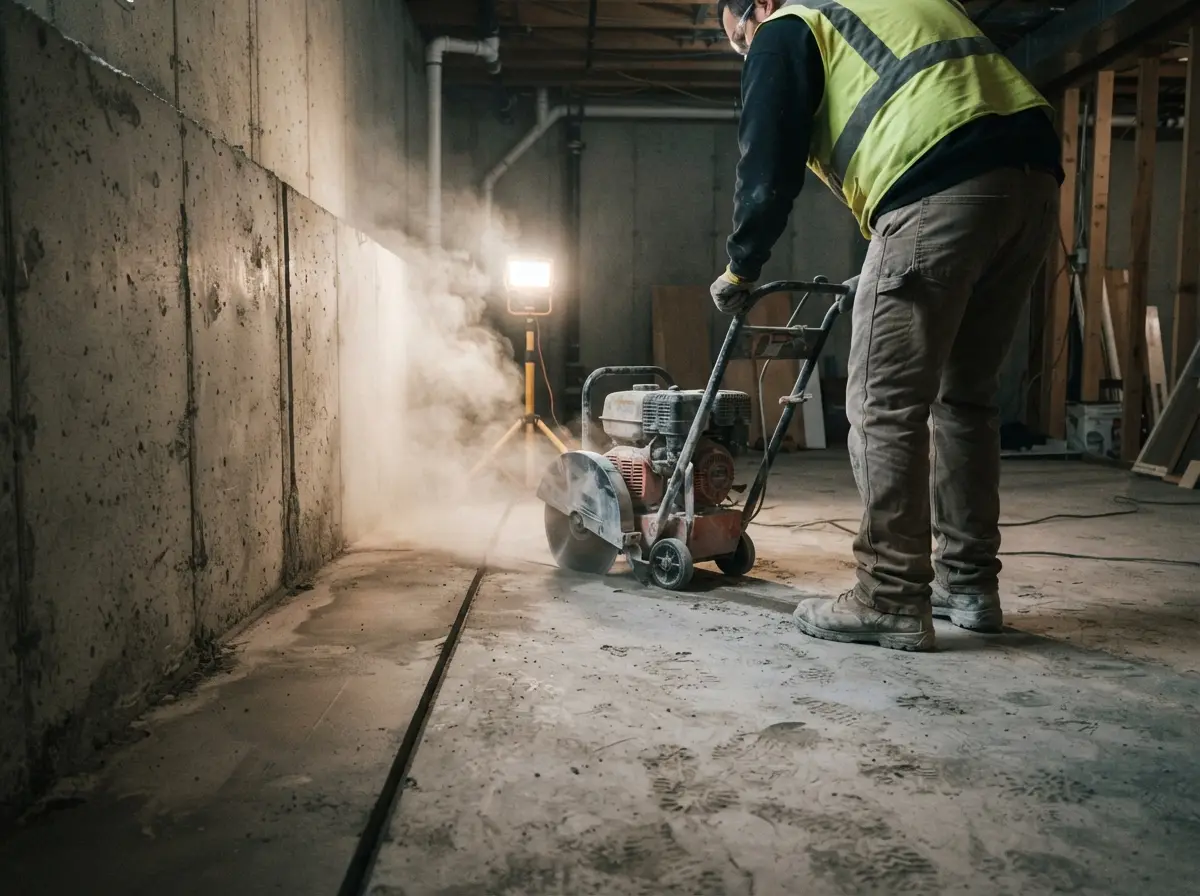
Older walls take more hand work
Around one in ten homes in the county was built before 1940, by Census estimates, and in boroughs like Langhorne, Doylestown and Quakertown the share runs far higher. Stone and early block walls mean repointing, uneven surfaces for the membrane and no footing drain to connect to.
What's under the slab
Much of the county sits on shale and sandstone, with harder diabase in parts of the north. Where rock is close under the floor, breaking out a trench or cutting a new pit goes slower, and the price reflects the hours.
Finish in the way
Drywall, framing, carpet, built-in shelving and a bathroom on an outside wall all add tear-out and put-back lines. A bare basement is the cheapest one to waterproof, and plenty of people put the drain in before they finish the room.
Keeping it down
Ways to shrink the number
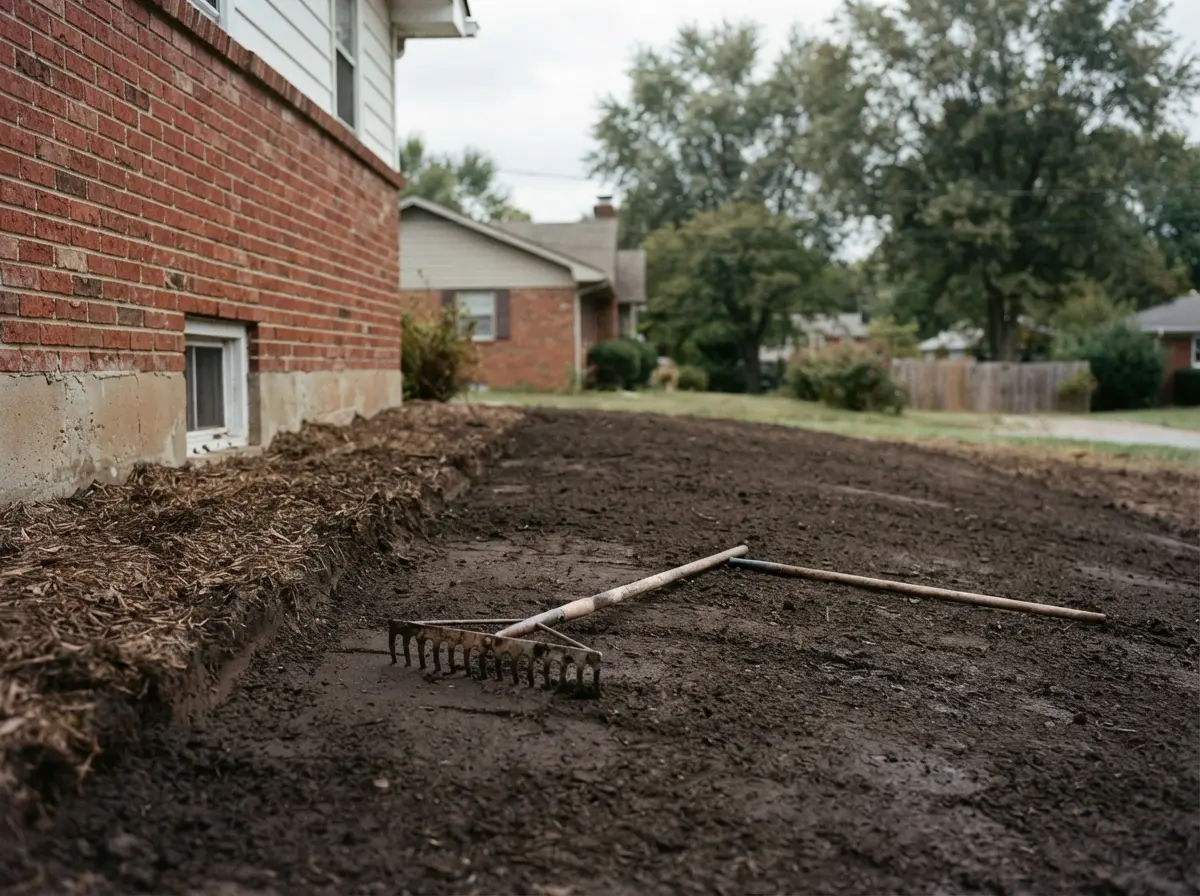
- Start outside. Downspout extensions and regrading a strip of soil cost little and can cut how much water reaches the walls, sometimes enough to shorten the drain.
- Drain only the walls that leak. When the water comes in along one side, the drain can run along that side alone to the pit.
- Keep a good pit. A sound, lined pit can often take a new pump and a sealed lid without being cut out again.
- Clear the walls first. Moving boxes, shelving and stored furniture away from the work area saves labor hours.
- Fix it before finishing. Waterproofing a bare basement avoids paying to take out and replace new drywall.
Pennsylvania's home improvement law requires a written contract for work over $500 and gives you three business days to cancel after signing. The disclaimer page has the details. You only pay for work you agreed to.
Questions
Questions about the price
Do I have to drain the whole perimeter?
No. If water comes in along one or two walls, the drain can run along those walls to the pit. The price should say which walls and how many feet, so you can see why it stops where it does.
Can the work be done in stages?
Often, yes. Gutters and grading can go first, then the drain on the worst wall, then the rest if water still shows up. Ask for each stage priced on its own line so nothing has to be redone.
Why does a stone foundation cost more?
More of the work is by hand. Old joints have to be raked out and repointed, the wall is uneven where the membrane meets it, and there is often no footing drain to tie into. Each of those is a line of its own.
Does a longer warranty change the price?
Sometimes. Ask what the warranty covers, whether it transfers when the house sells, and whether it needs yearly service to stay valid. A warranty only on the pump is a different thing from one on the whole drain.
The first call
On the call we'll ask how many walls take water and whether the basement is finished.
Those two answers shape the visit, and the measured price arrives in writing, line by line, before a saw touches the slab.