Foundation crack repair
Foundation Crack Repair for Bucks County Basements
A crack that only weeps in rain is usually a single injection. The visit sorts that from a block wall moving inward, and prices whichever you have.
Read the crack
Crack shape, wall type and what it means
Bucks County Waterproofing sets up foundation crack repair for poured, block and stone basements across Bucks County. Most calls are about one crack that leaks, and most of those are the least serious kind. The shape of the crack and the kind of wall it's in tell you a lot before anyone arrives, and they decide whether the job is an injection, a joint repair or bracing for a wall that's moving.
Find yours in the table, then call with a photo ready to describe it.
| Crack | Where you see it | What it usually means | Usual repair |
|---|---|---|---|
| Vertical hairline, poured wall | Runs up and down, often from a window corner or the middle of a long wall | Usually a shrinkage crack from when the concrete cured. A leak, not a structure problem. | Injection from inside |
| Diagonal, poured wall | Runs at an angle from a corner, sometimes wider at one end | Some settling at that corner. Fine if it hasn't changed; worth watching if it grows. | Injection, plus a check of the grade and downspouts at that corner |
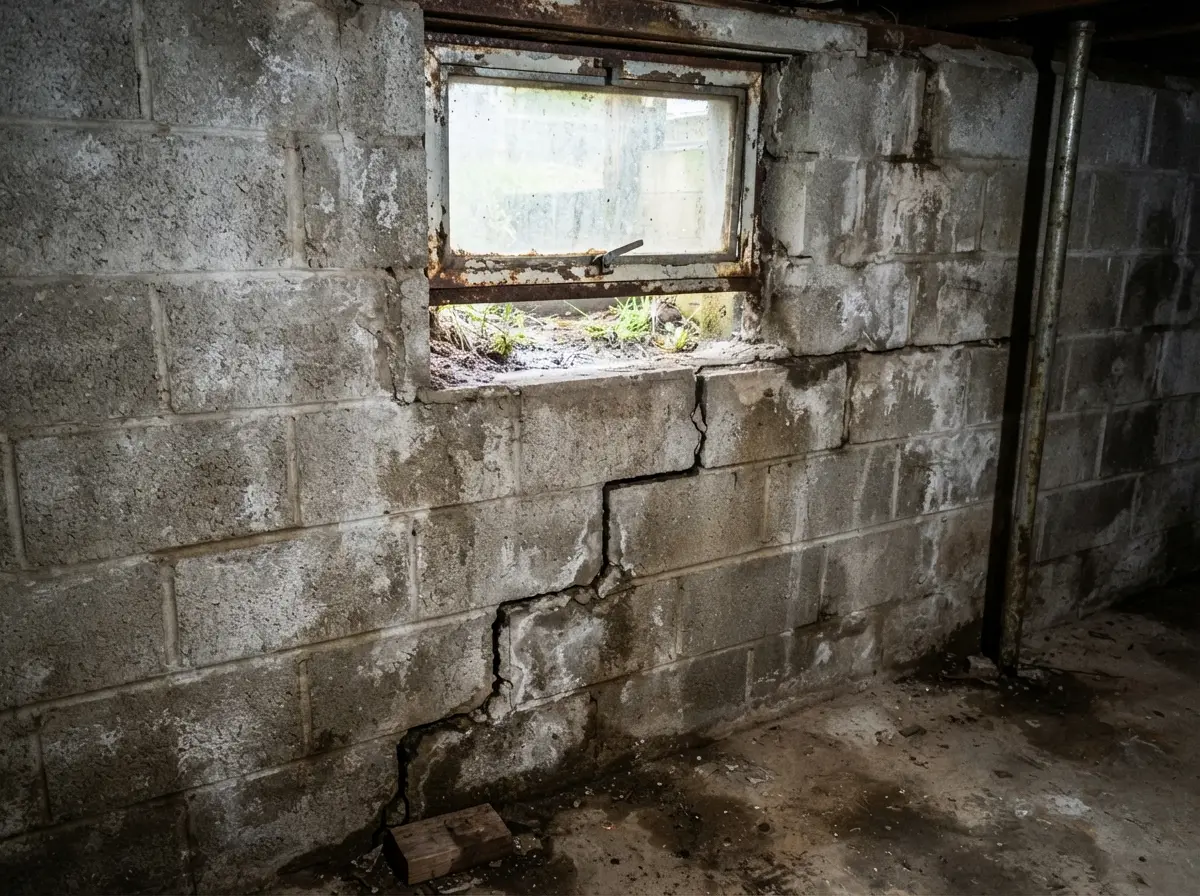
| Stair-step, block wall | Follows the mortar joints in a zigzag | Settlement or soil pressure. Often leaks at the joints and holds water in the cores. | Joint repair and usually a perimeter drain; a closer look if blocks have shifted |
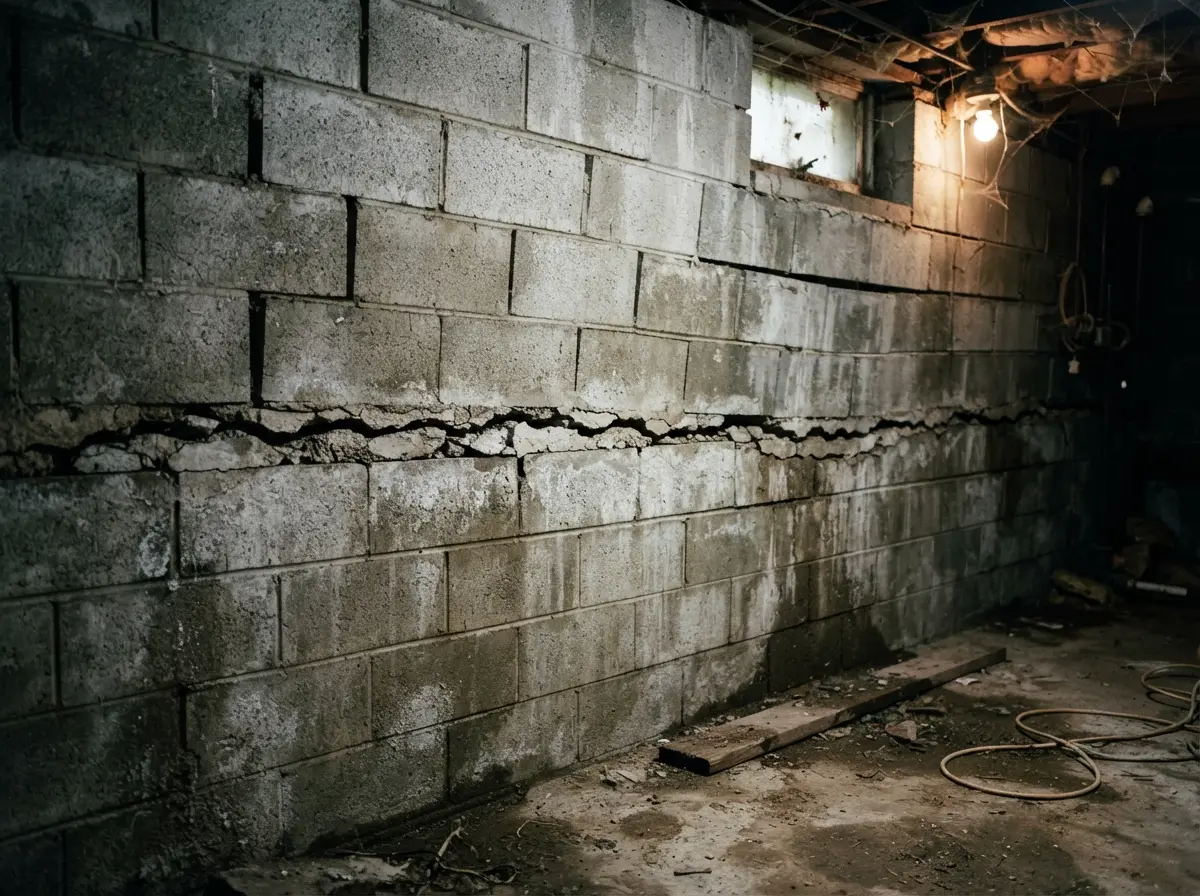
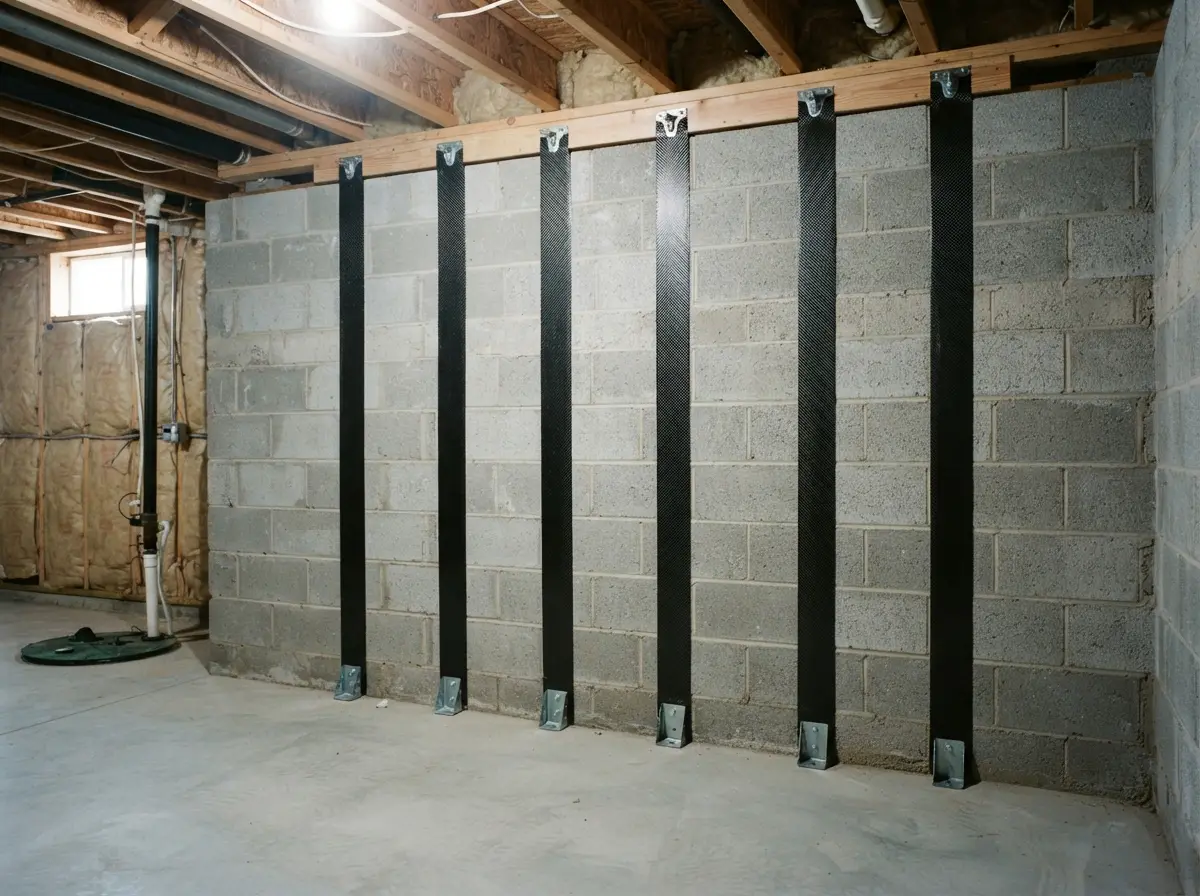
| Horizontal, block wall | One long crack along a mortar joint, partway up the wall | Soil pushing the wall inward. The most serious crack on this list. | Wall bracing (anchors, carbon fiber or steel beams) before any waterproofing |
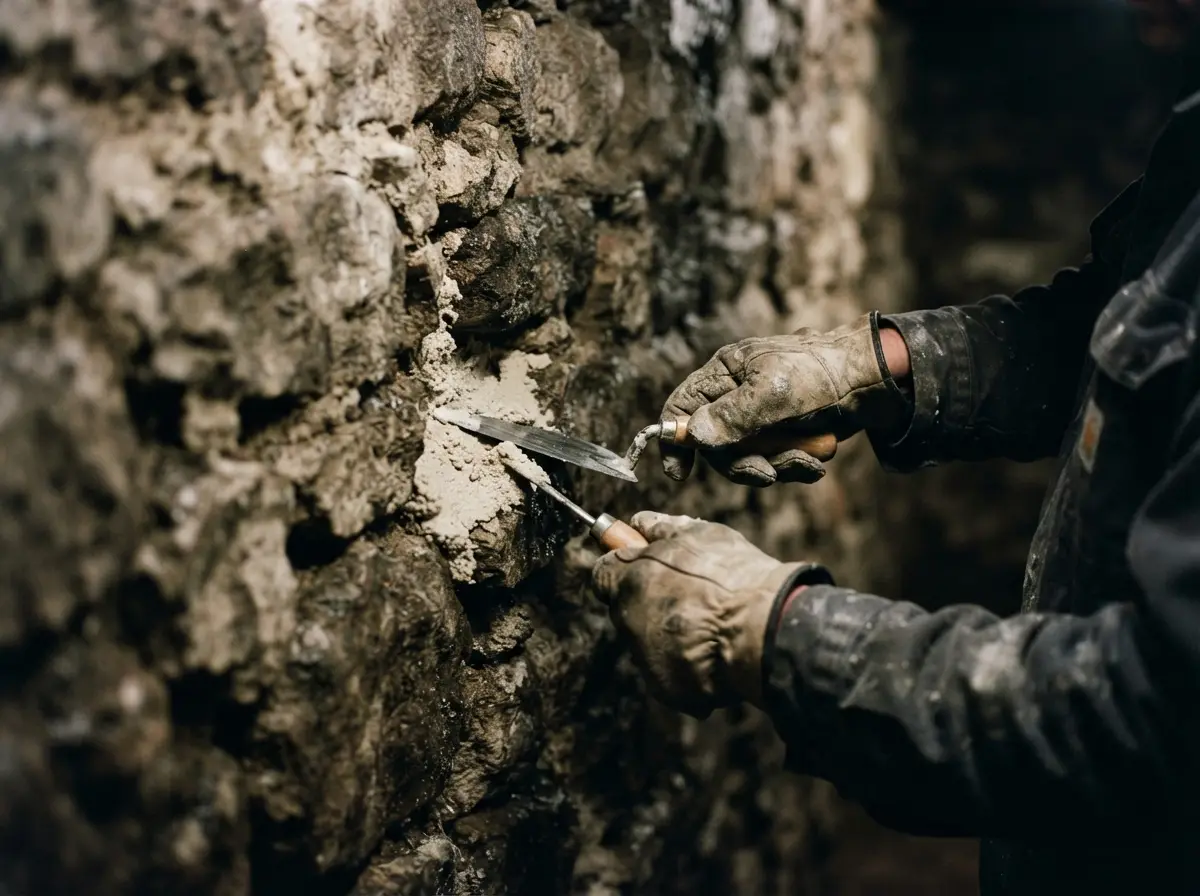
| Open joints, stone wall | Mortar crumbling out between stones, sand on the floor | Old lime mortar washed out by years of water. Not a crack so much as a worn wall. | Repointing with a compatible mortar, then drainage at the base |
Poured walls
Crack injection, epoxy or polyurethane
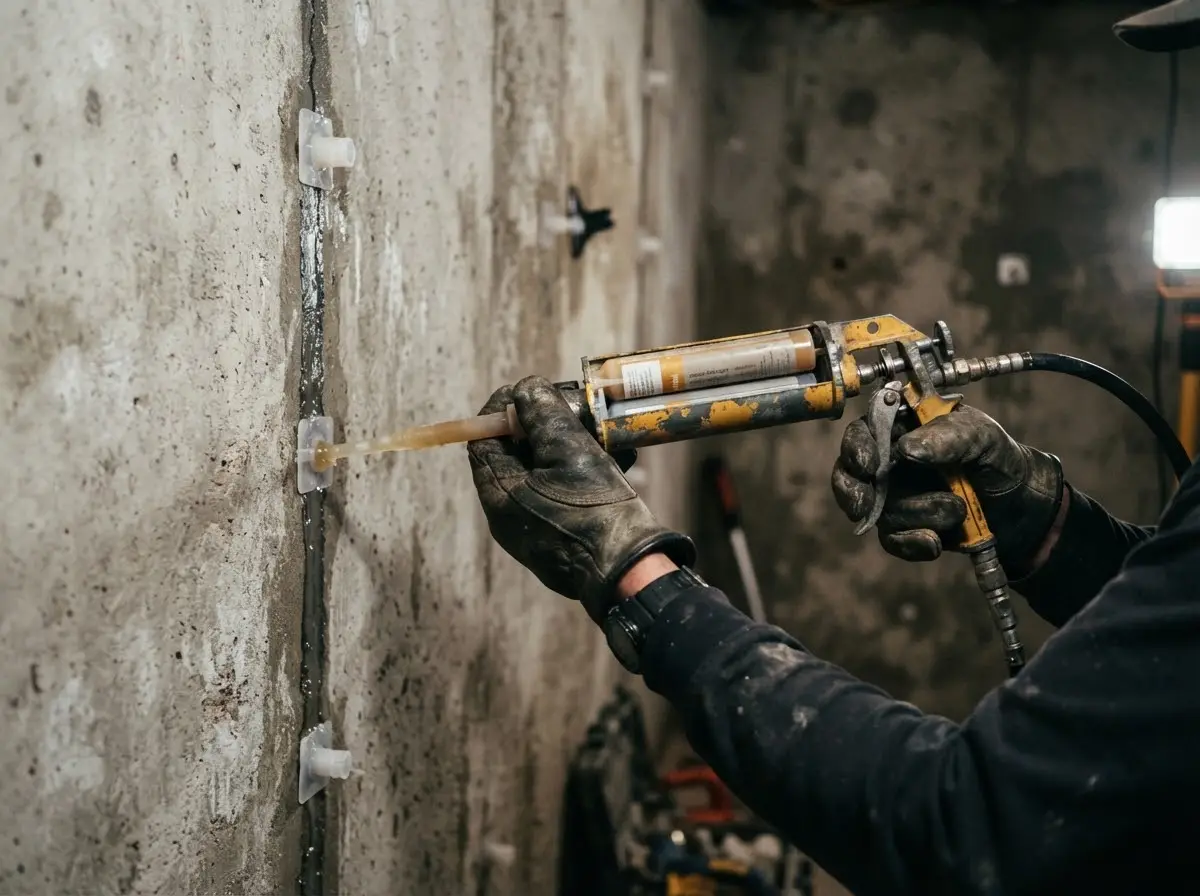
For a single leaking crack in a poured concrete wall, injection from inside is the standard repair.
The crack gets cleaned, small ports are set along it, the face is sealed over, and resin goes in under pressure from the bottom port up, until it shows at the next one. That pushes the resin through the full thickness of the wall instead of plugging the surface.
Polyurethane
Expands into a flexible foam that stays bonded as the wall moves with the seasons. It's the usual pick when the job is stopping water in a crack that isn't structural, and it works on a crack that's damp or actively dripping.
Epoxy
Cures hard and bonds the two sides of the crack back together. It's chosen when the crack needs to carry load again, and it wants a crack that's dry enough to bond to.
Ask which resin is being used and why. Injection is a poured-wall repair: block walls are hollow and stone walls are full of joints, so resin pumped into them has nowhere to hold.
Block and stone
Mortar joints, cores and old stone
Concrete block
A crack in a block wall lets water into the hollow cores, which then hold it like a tank and leak out low on the wall, sometimes a long way from the crack. Sealing the joint on the face helps the look of the wall, but the water usually needs a drain at the base, with weep holes drilled into the bottom course so the cores empty into it. That's a perimeter drain job, and the joint repair goes on the same written price.
Fieldstone and rubble
More than a quarter of the homes in Doylestown, Quakertown and Morrisville boroughs were built before 1940, according to Census estimates, and houses that old often stand on stone. Those walls were laid in soft lime mortar. Repointing means raking out the loose mortar to a sound depth and packing in a mortar that's no harder than the stone, so the wall can still breathe. Ask what mix is going in. A hard cement patch over soft stone tends to trap water and crack the stone around it.
Structural or not
When a crack means the wall is moving
These are the signs that the visit is about more than a leak:
- A long horizontal crack in a block wall, especially at about the height of the soil outside.
- The middle of a wall leaning or bowing into the basement. A straightedge held against it shows the gap.
- One side of a crack sitting farther out than the other.
- A crack that has clearly grown since you first noticed it.
- Doors upstairs that suddenly stick, alongside new cracks below.
A bowing wall gets braced first, with wall anchors, carbon fiber straps or steel beams depending on how far it has moved, and waterproofed after. Fixing the water alone leaves the soil pressure that's pushing the wall. Ask for the bracing and the waterproofing as separate lines on the price, so you can see what each part does.
Questions
Crack repair questions
Can the crack be sealed from outside instead?
It can, by digging down to the crack and sealing the outside face, but that is a much bigger job, and on a poured wall it is rarely needed for one crack. An inside injection fills the crack through the full thickness of the wall. The interior vs exterior guide covers when digging makes sense.
The crack is dry most of the year. Should it be fixed?
If it only darkens a few times a year, it will usually keep doing exactly that. Many people fix it before finishing the basement, since a leak behind new drywall goes unnoticed until the damage is done.
Will hydraulic cement from the hardware store hold?
On an active leak it tends to pop out within a season or two, because it sits in the face of the crack and the wall keeps moving with temperature and moisture. Injection fills the crack through the wall and moves with it.
How can I tell if a crack is getting worse?
Mark both ends with a pencil and the date, and take a photo with a ruler or coin beside it. If the line grows past your marks, or one side starts sitting proud of the other, mention that on the call.
The first call
The call starts with which way the crack runs and what the wall is made of.
That sets up the right visit for an injection, a joint repair or bracing, and the crack gets priced in writing before any work begins.