Basement waterproofing
Basement Waterproofing in Bucks County, PA
The fix follows the wall. Poured, block and fieldstone basements leak in different places, and the written price spells out the system built for yours.
The job
Basement waterproofing for Bucks County foundations
Bucks County Waterproofing sets up basement waterproofing for houses across Bucks County, PA: interior perimeter drains, sump pits and pumps, wall membranes, crack injection, and the downspout and grading work outside that takes water off the walls in the first place. The contractor who comes out looks at where the water enters, what the wall is made of and how much of it there is before anything gets priced.
Most basements that leak here leak for one reason. After a long rain or a fast snowmelt, the soil around the house fills with water, and that water presses on the outside of the foundation until it finds a way in. The way in depends on the wall. Read the table below against your basement before you call, and you'll know which questions to ask.
By wall
Poured, block and stone walls
| Wall | Where water usually gets in | What usually fixes it |
|---|---|---|
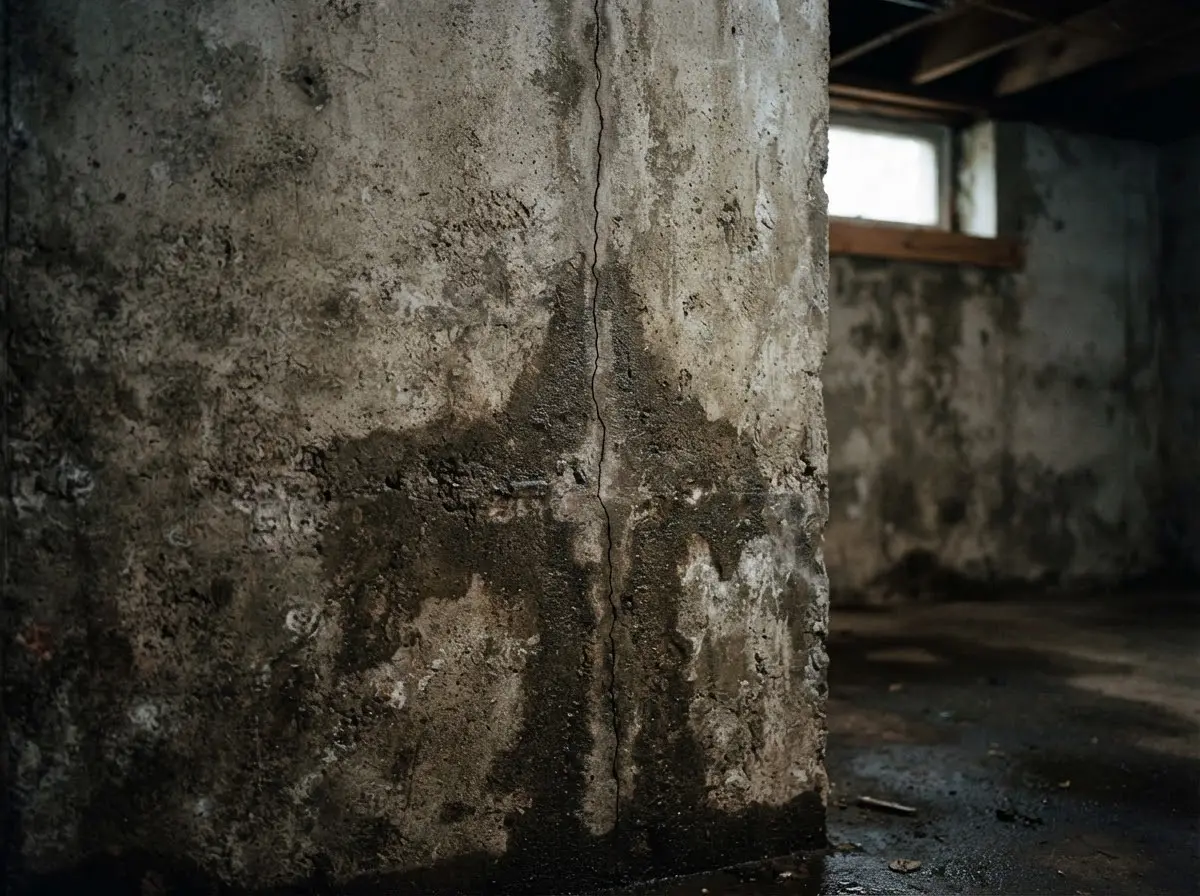
| Poured concrete | Single vertical cracks, the floor-wall joint, tie-rod holes and pipe penetrations | Crack injection for one or two cracks; a perimeter drain when water comes in along the joint on several walls |
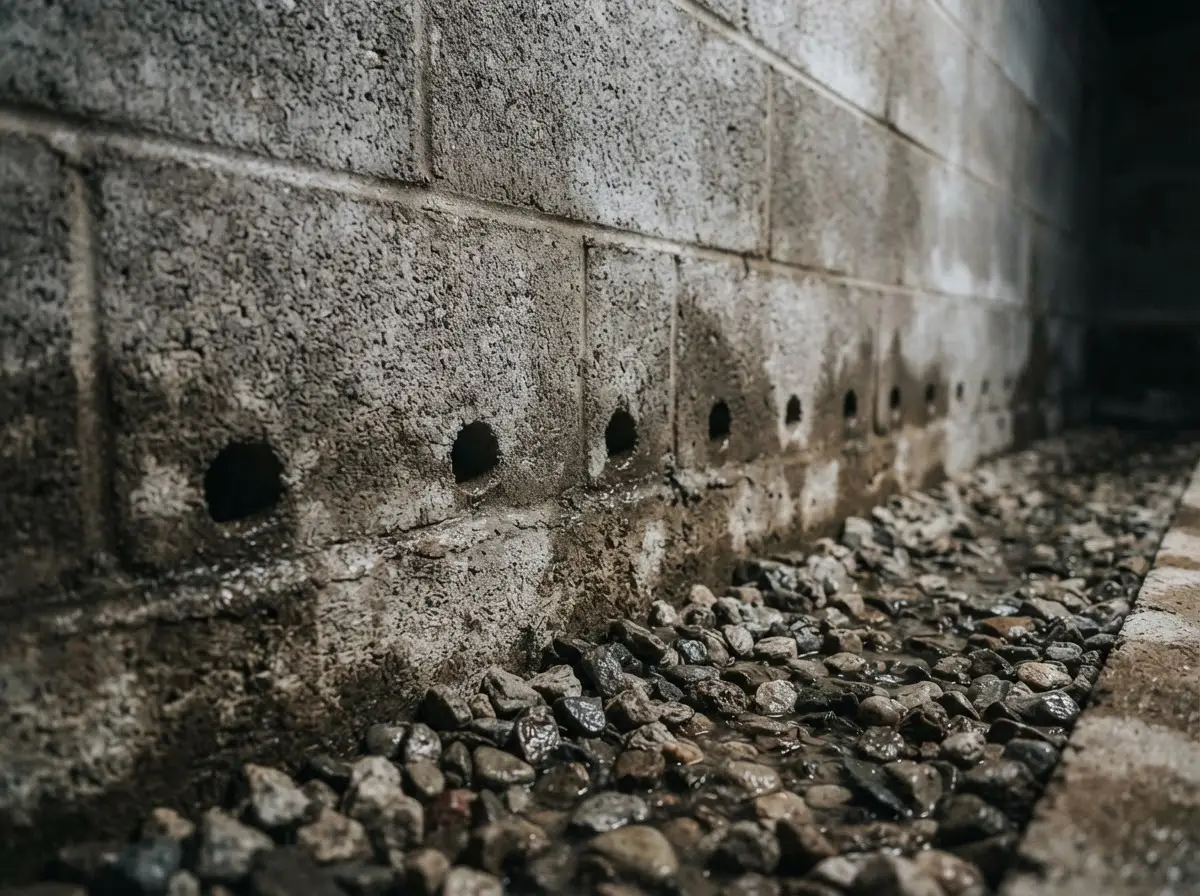
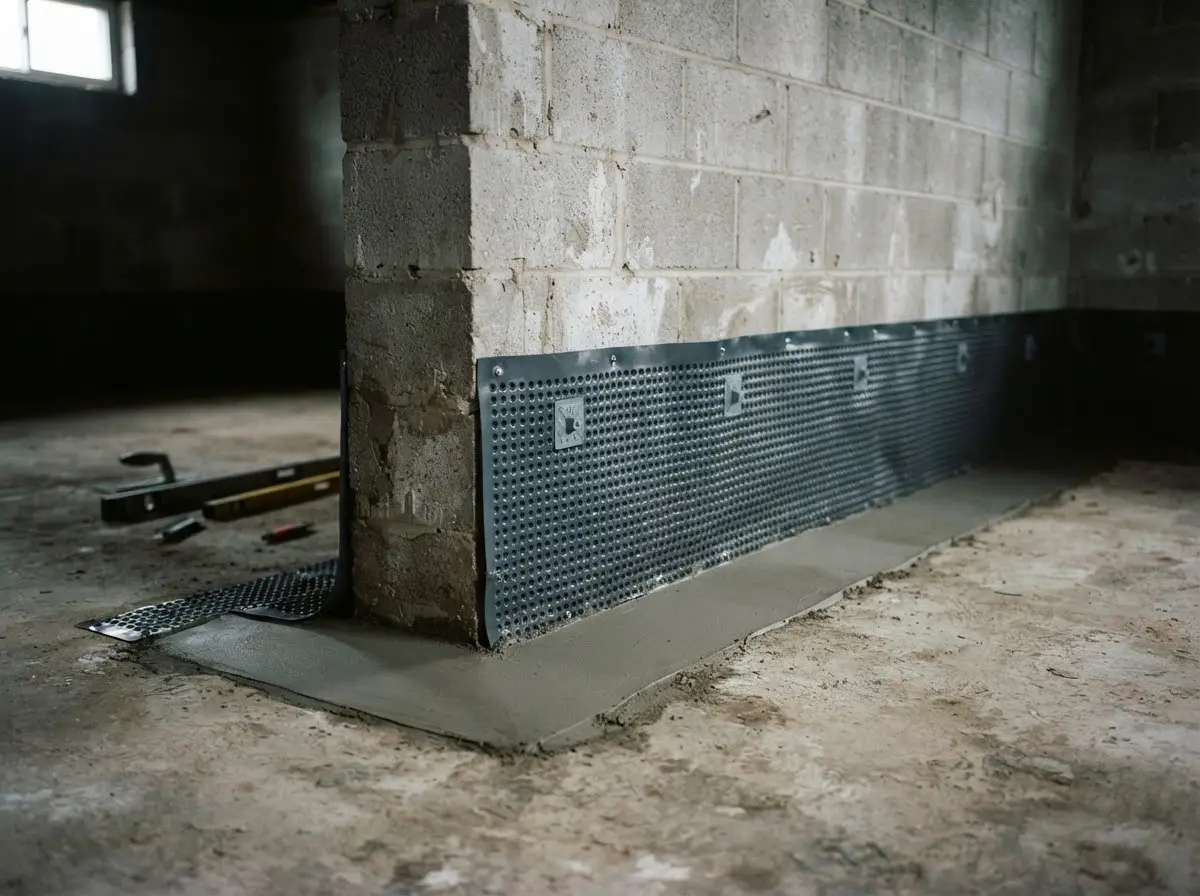
| Concrete block | Water fills the hollow cores and weeps out low on the wall or at the joint; white powder and peeling paint on the face | Perimeter drain with weep holes drilled into the bottom course so the cores drain into it, plus a wall membrane |
| Fieldstone or rubble | Through mortar joints as old lime mortar washes out; sand on the floor; damp patches that move with the weather | Repointing the joints, then usually a perimeter drain at the base, since stone walls rarely have a footing drain |
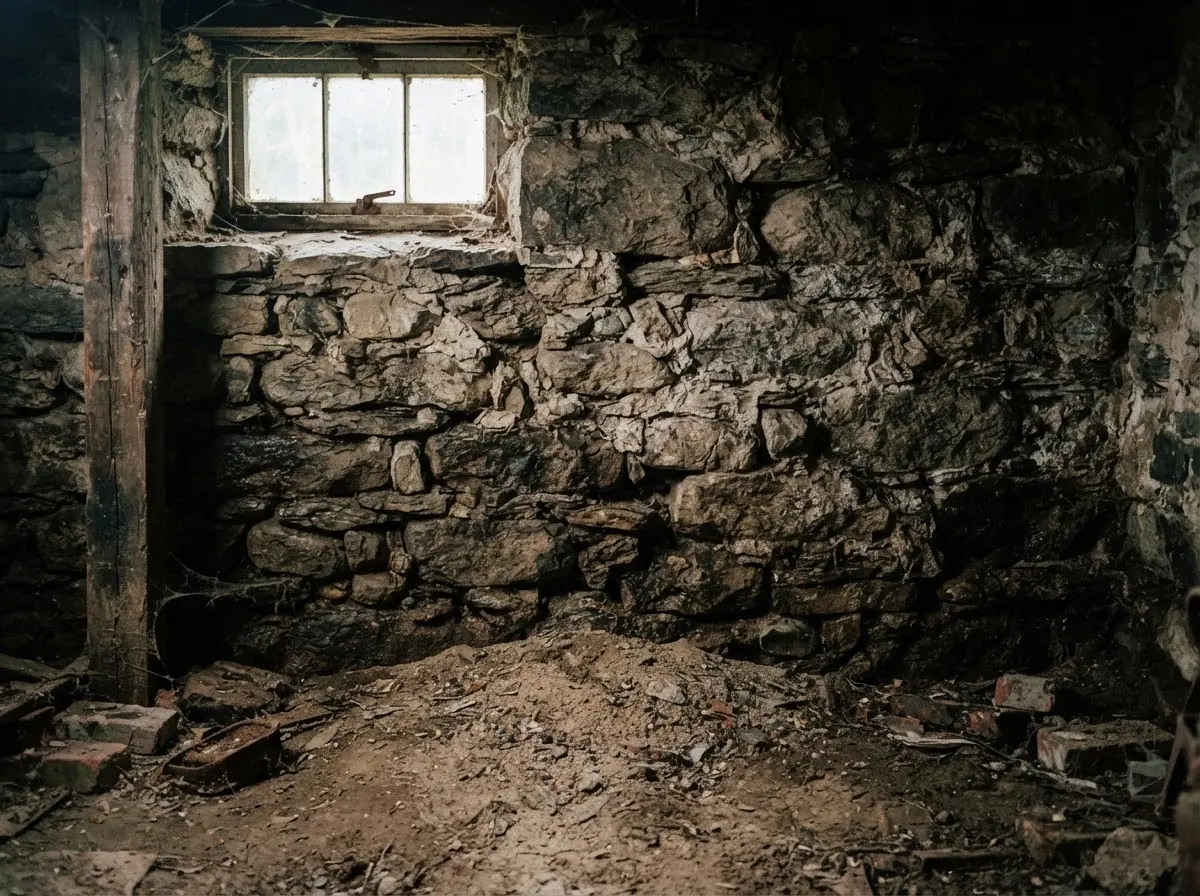
Stone cellars under older farmhouses and borough houses are the odd ones out. Their mortar was usually lime-based, which is softer than the stone, and it's meant to be repointed with a mortar just as soft. Hard portland cement packed into those joints can trap water in the stone and push the damage elsewhere. If your walls are stone, ask what mortar goes into the joints and how deep the old mortar gets raked out first. Crack and stone wall repair covers that job on its own.
Inside the system
Perimeter drain, sump and discharge
An interior perimeter drain is the system most leaking basements end up with, because it deals with water at the point it arrives instead of trying to hold it back.
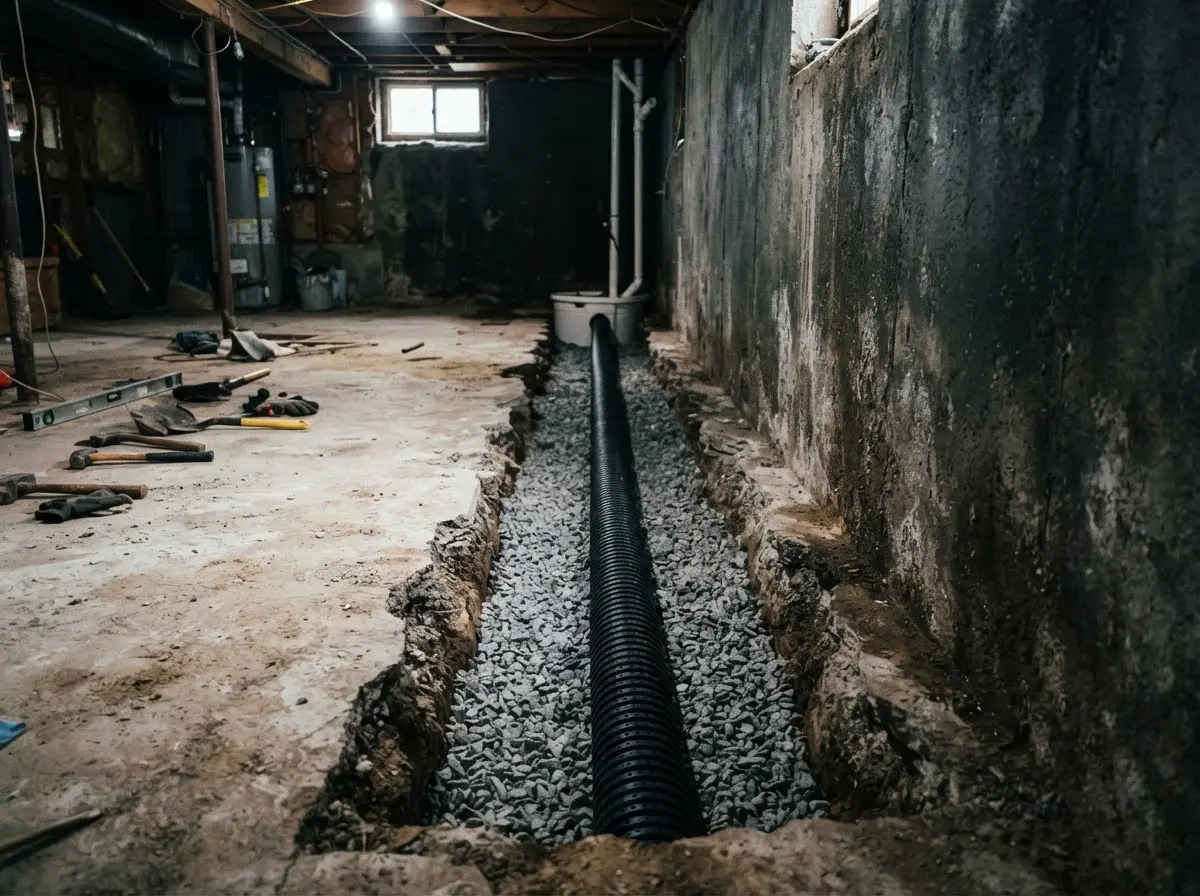
- The trench. The slab gets cut and broken out along the walls that leak, down to the footing.
- Drain pipe in stone. Perforated pipe goes in on a bed of washed stone, sloped toward the sump.
- Weep holes in block. On block walls, small holes are drilled into the bottom course so water in the hollow cores drains straight into the pipe.
- A wall flange or membrane. A plastic sheet runs from the trench up the wall so water that runs down the face goes behind it and into the drain, not across the floor.
- The sump pit. A lined pit with a sealed, gasketed lid collects the water. The pump and its backup are a decision of their own.
- The discharge line. A check valve stops water dropping back into the pit, and the line exits the wall and ends far enough from the house that the water doesn't soak back in.
- The patch. New concrete goes back over the trench, flush with the old floor.
Outside first
Gutters, downspouts and grade
A downspout that empties at the foundation drops a whole section of roof onto one corner of the basement wall. Soil that has settled into a dip along the house, or a patio pitched toward it, does the same thing more slowly. On a basement that leaks only at one corner, in heavy rain, fixing the outside can be the whole job.
The visit includes a walk around the house for that reason. Downspout extensions, regrading a strip of soil and clearing a clogged window well are small lines next to a drain system. If they're enough, the written price should say so. If water is coming up at the floor joint on every wall, the outside work still helps, but the ground water underneath needs the drain. The full case for digging out the outside of a wall instead is in the interior vs exterior guide.
Reading the price
Lines to look for in a waterproofing price
A written price that lists each line tells you what's actually going in the floor.
- Linear feet of drain and which walls it runs along.
- Weep holes on block walls, and how high the wall membrane goes.
- The pump: make, model and horsepower, the pit size and lid, and whether a battery backup is included.
- The discharge route: where the line leaves the house, where it ends and how it's kept from freezing.
- Wall finish that has to come off and whether it goes back.
- Concrete patch and haul-away of the broken-out slab.
- The warranty: what it covers, for how long and whether it transfers to the next owner.
Rough numbers for each line, and what pushes them up, are on the waterproofing cost page. You only pay for work you agreed to.
Finished rooms
Drywall, carpet and a finished basement
A perimeter drain runs along the inside of the foundation, so in a finished room the bottom of the framed walls is in the way. Usually the lower foot or two of drywall and the carpet along those walls come out, the drain goes in, and the room gets put back once the patch has cured. Wet insulation and drywall that's already wicking water have to go anyway.
Tell us on the call what the walls and floor are finished with, and whether there's a bathroom or bar on an outside wall. The written price should list what comes off and who puts it back.
Soil gas
Radon and an open slab
Bucks County sits in the EPA's Zone 1, the band where average indoor radon is predicted to run above 4 picocuries per liter, and Pennsylvania's DEP reports that about 40 percent of homes tested in the state come in above that level. A perimeter drain and a sump pit both open the soil under the slab, so the pit lid should be sealed and gasketed, not a loose cover.
The EPA's radon guidance notes that a capped sump can keep draining water and also serve as the suction point for a radon system, which makes the waterproofing job a sensible time to ask about one. Test before the work and again after it, in the lowest room you use.
Questions
Drain system questions
How long does an interior drain job take?
It depends on how many feet of wall are involved and what has to come off them. Ask for the number of working days in the written price, along with whether the basement can be used while the concrete patch cures.
Can a basement be waterproofed from the inside at all, or does the outside have to be dug?
Most leaking basements here are fixed from inside, with a drain that catches the water at the footing and sends it to a pump. Digging out the outside of the wall makes sense in narrower cases. The interior vs exterior guide sets out when.
Will painting the walls with waterproof coating stop the leak?
Not when water is pushing through under pressure. A coating can cut dampness on a wall that only sweats, but on a block or stone wall that takes on water after rain, the water goes around or behind it and the paint lifts. The visit tells you which kind of wall you have.
Does a dehumidifier replace waterproofing?
It handles humidity, not liquid water. A basement that only smells musty in August may need nothing more. One with water on the floor after rain needs the water stopped first, and a dehumidifier after.
The first call
We start by asking which walls get wet and whether they're poured, block or stone.
From that, the visit is set up for the wall you have, and every foot of drain is priced in writing before the floor gets cut.