Method guide
Interior vs Exterior Basement Waterproofing, Compared
Inside drains catch water once it reaches the wall; outside membranes stop it at the face. Your walls, your yard and your finish decide which one fits.
Short answer
Which method most basements here get
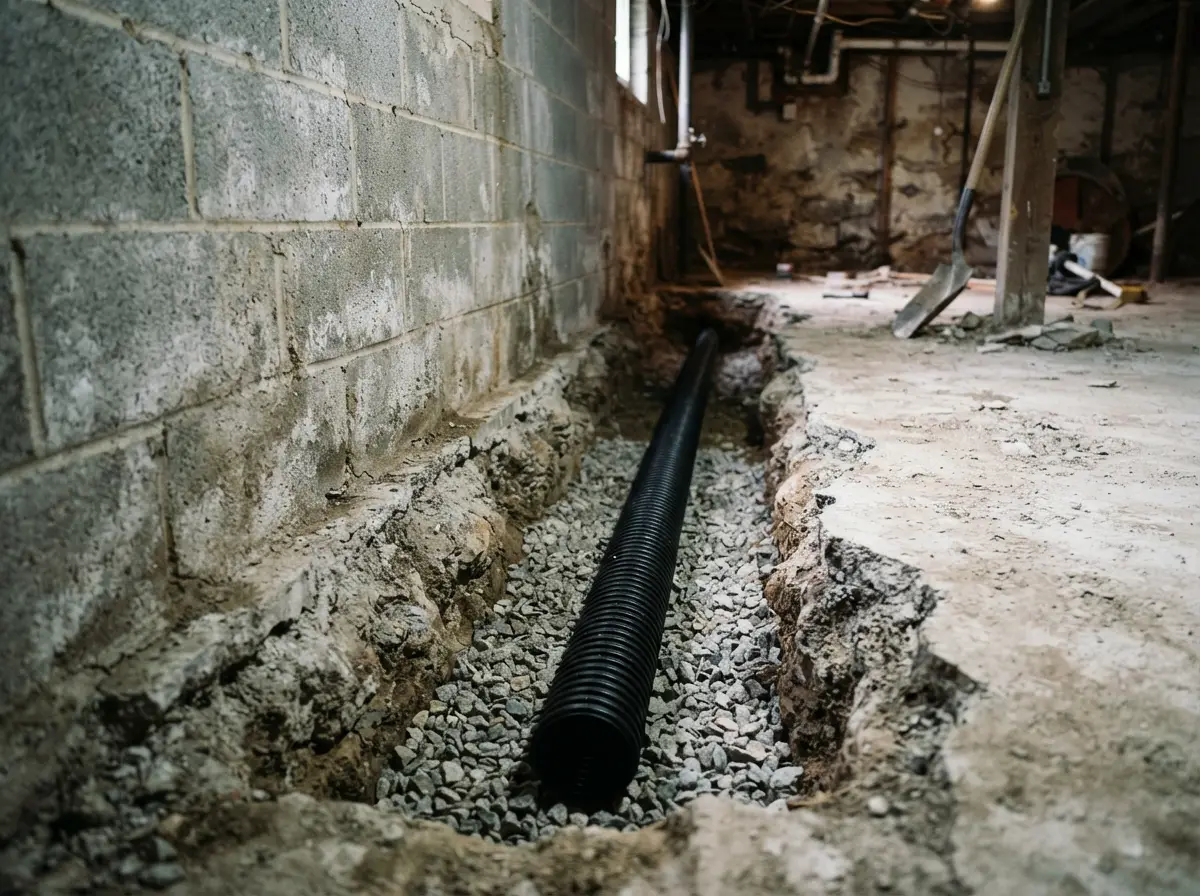
Most leaking basements in Bucks County are fixed from the inside, with a perimeter drain at the footing that carries water to a sump pump. It costs less for the same wall, works in any season and deals with water coming up under the footing as well as through the wall. Exterior waterproofing, where the soil is dug away and a membrane goes on the outside face, is the better fit when the wall itself needs to stay dry or needs work from the outside.
Bucks County Waterproofing sets up both kinds of job. The visit looks at the wall, the yard and how the basement is used before either one is priced.
Side by side
Interior drain and exterior membrane
| Interior drain | Exterior excavation | |
|---|---|---|
| Where the water is stopped | Inside, at the footing, after it has come through or under the wall | Outside, at the face of the wall, before it gets in |
| The wall itself | Stays damp on the soil side; water drains down behind the membrane | Stays dry, which matters for a wall you plan to finish or a block wall that is deteriorating |
| What gets dug up | A trench in the basement floor along the walls | The yard, down to the footing: plantings, walks, patios and steps in the way |
| Weather | Can be done any time of year | Needs workable ground and a dry stretch; an open trench in a storm is a problem |
| Relies on a pump | Yes, the drain ends at a sump | Often yes too, unless the footing drain can run to daylight on a sloped lot |
| Wall repairs along the way | Inside-face repairs only | Outside cracks get sealed, and anchors or bracing can go in while it is open |
| Usual price | Lower, for the same length of wall | Higher, mostly from excavation, backfill and restoring the yard |
Inside fits
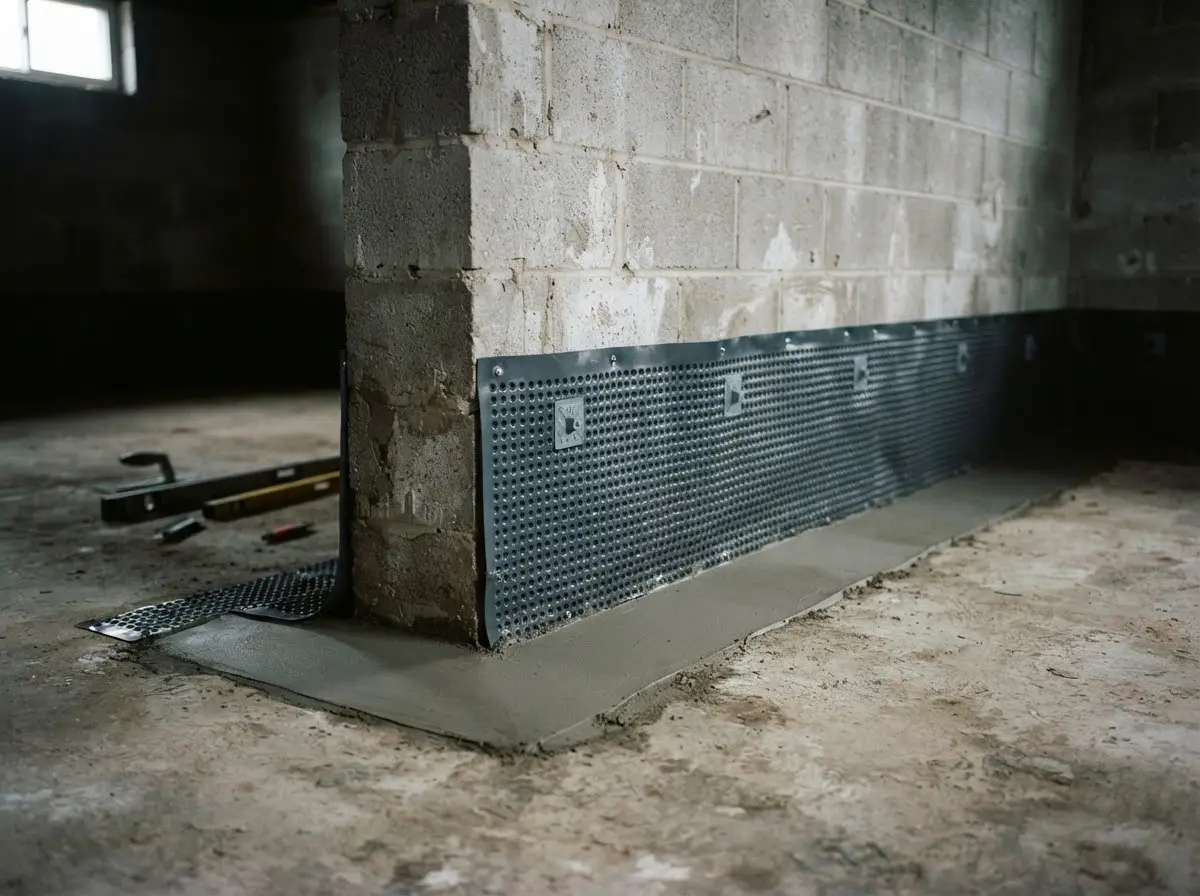
Basements suited to an interior drain
- Water spreading from the floor-wall joint on several walls after long rains.
- Water coming up through the slab or at the joint, not only through the wall.
- A yard with patios, driveways, decks or close neighbors along the walls that leak.
- Block walls whose cores fill with water, drained through weep holes into the trench.
- A job that can't wait for spring, or a budget that has to cover the whole perimeter.
Outside fits
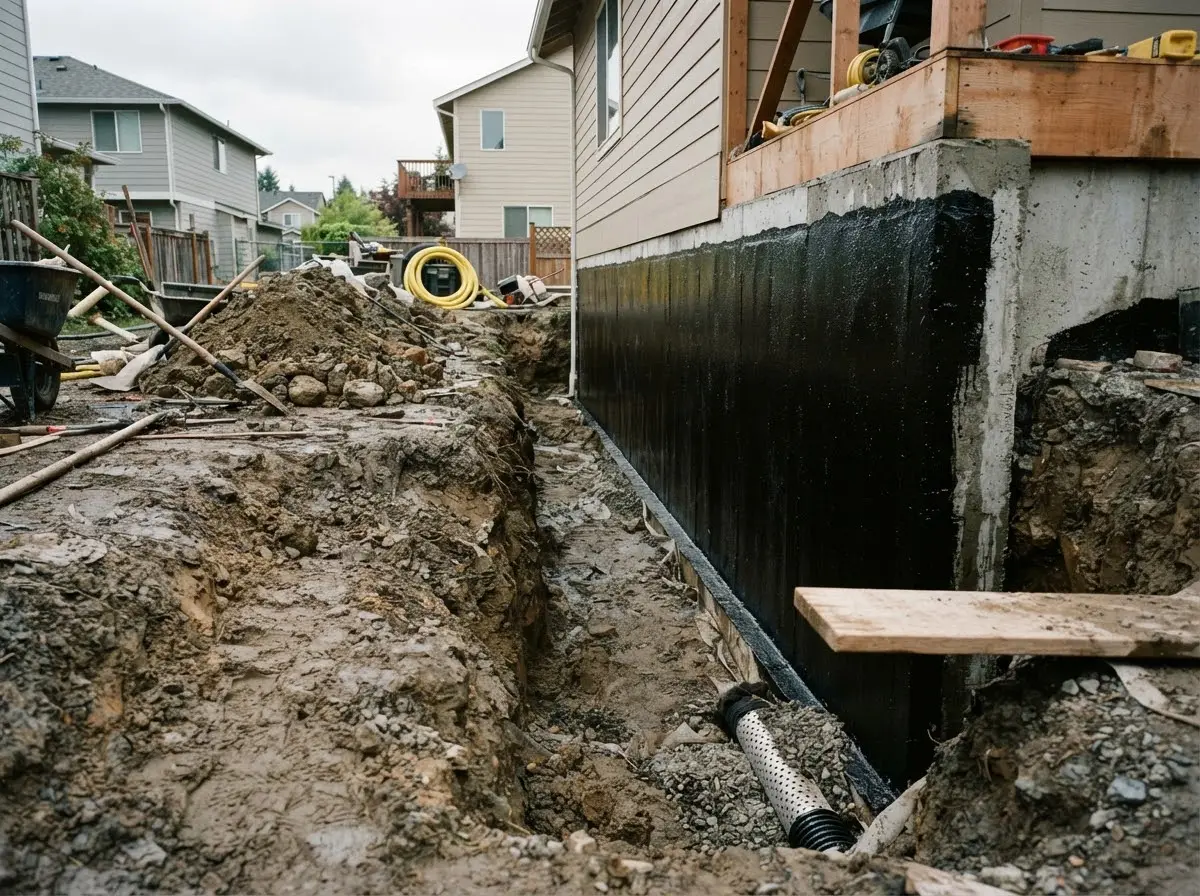
Basements suited to digging out the wall
- A finished basement where the wall itself has to stay dry behind the drywall.
- A bowing wall getting anchors from outside, with the trench already open.
- A block or stone wall breaking down on the soil side.
- One problem wall, often a corner soaked for years by a downspout or a patio pitched toward the house.
- A sloped lot where a new footing drain can run to daylight with no pump.
Bucks ground
Shale soils and an open trench
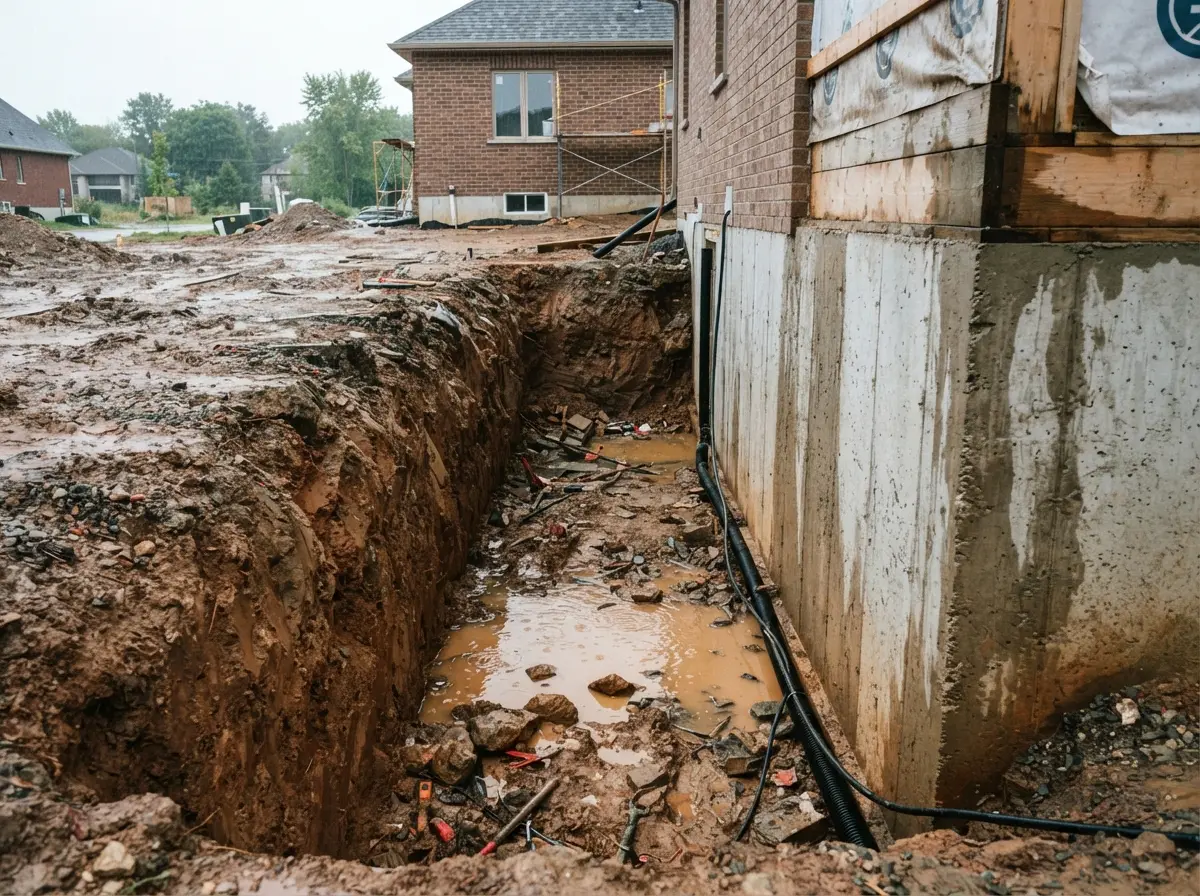
Across the shale belt of central and upper Bucks, soils like the Doylestown and Croton series drain slowly and hold water above a dense layer in late winter and spring. That works against exterior jobs in two ways. The backfill around a foundation stays wet for weeks, so an open trench can fill, and slow-draining native soil put back against a new membrane still holds water against it unless it's replaced with clean stone.
None of that rules out exterior work. It means the price should say what goes back into the trench, how the new footing drain connects, and what happens if it rains while the wall is open. An interior drain avoids all three, and that's a large part of its popularity in this county.
Questions
Inside or outside questions
Is an interior drain a last resort?
No. For most leaking basements it is the standard repair, because it handles groundwater coming up under the footing as well as water through the wall, and it can be done without tearing up the yard. Exterior work earns its higher price in the specific cases on this page.
Can both be done on one house?
Yes, and it is common to do exterior work on one wall, often where a patio or a downspout has soaked a corner for years, and an interior drain on the rest. The written price should show each wall separately.
What about the old clay drain tile outside the footing?
Many older houses had a clay or tile footing drain outside that has since silted up or collapsed. Digging it out and replacing it is exterior work. An interior drain does the same job from the other side of the wall without excavating.
Does exterior waterproofing need a permit?
Excavation near a foundation, a new discharge to a storm drain or work in the right-of-way can need township approval, and the rules differ between Bucks County municipalities. Ask whether permits are included in the price.
The first call
We'll want to know early whether the leaking wall is finished, and what's outside it.
With that, the visit can weigh both methods for your house, and the one that fits gets priced in writing first.