Sump pump installation
Sump Pump Installation and Replacement in Bucks County
Storms knock out power right when the pit fills. The new pump goes in with a check valve, a clear discharge line and a backup option priced.
Warning signs
Pumps on the way out
Bucks County Waterproofing sets up sump pump installation, replacement and backup systems for basements across Bucks County. A pump usually warns you before it quits. Any of these is a reason to call before the next storm, not after it.
Runs and runs
The motor keeps going after the pit is empty, often a float stuck in the up position or a check valve letting water fall back.
Clicks on every minute
Short cycling in dry weather can mean the check valve has failed and the same water is going round and round.
Hums, moves nothing
A jammed impeller or a clogged intake screen. The pump is drawing power and the pit is still filling.
Float rubbing the wall
A tethered float that catches on the side of a narrow pit stops the pump from switching on.
Water beside a working pump
The pump is fine but water never reaches it. That points at the drain feeding the pit, or no drain at all.
Rust, noise, no history
Grinding, rattling, a rusted housing, or a pump nobody in the house remembers being put in.
The main pump
Horsepower, float and pit
A replacement is more than swapping the motor. The pump, the switch that turns it on, the pit it sits in and the line it pushes water through all have to work together, and a weak link in any of them floods the floor just as surely as a dead motor.
Submersible or pedestal
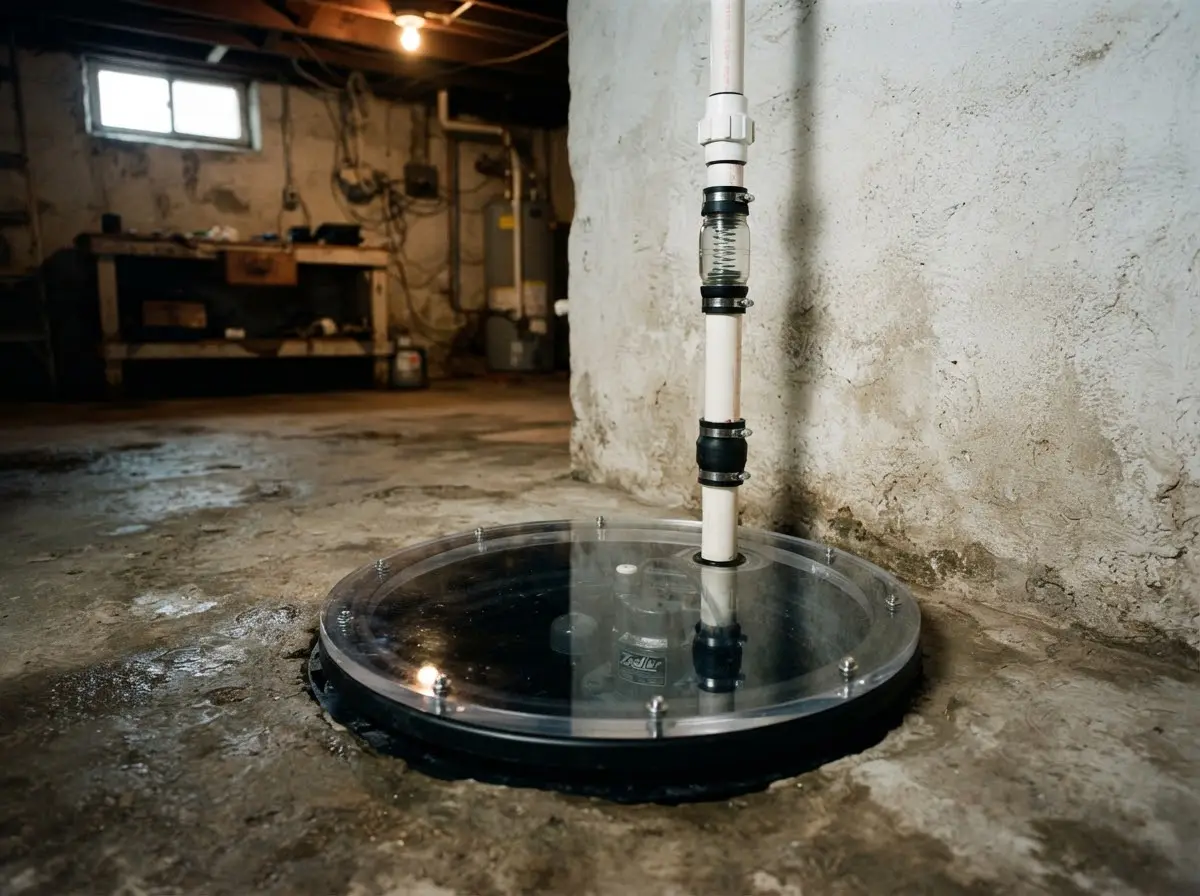
Submersible pumps sit in the water inside a lidded pit and run quieter. Pedestal pumps keep the motor up on a post above the pit, which suits a narrow, shallow pit and is easy to reach, but leaves the pit open unless it's built around.
The float switch
Tethered floats swing up on a cord and need a wide pit to move freely. Vertical floats ride up and down a rod and fit narrow pits. Electronic switches have no moving float at all. In a pit that fills fast, the switch type decides how often the pump starts.
The check valve
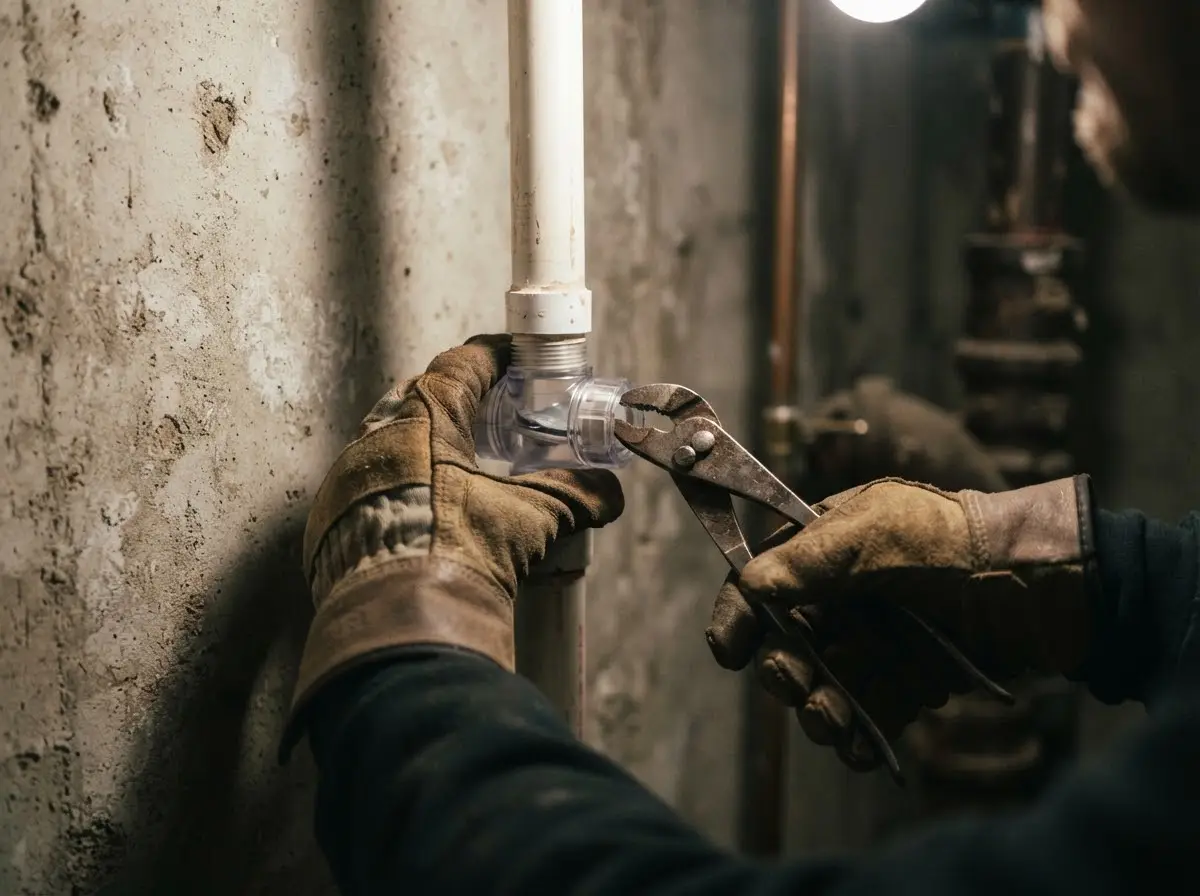
Without one, the water in the discharge pipe falls back into the pit every time the pump shuts off, and the pump pumps it again. A check valve on the line stops that. Ask for a union or a valve that can be opened without cutting the pipe, so the next service is simple.
The pit and lid
An old clay-tile or bare-earth pit gets replaced with a lined basin. A sealed, gasketed lid keeps debris out, cuts the damp smell and stops soil gas coming up through the pit, which counts here: Bucks County is in the EPA's highest radon zone.
Power outages
Backup pumps for storm nights
The heaviest rain often arrives with wind that takes the power down, which is exactly when a pump without a backup stops. Here's how the options compare.
| Backup | How it works | Where it fits |
|---|---|---|
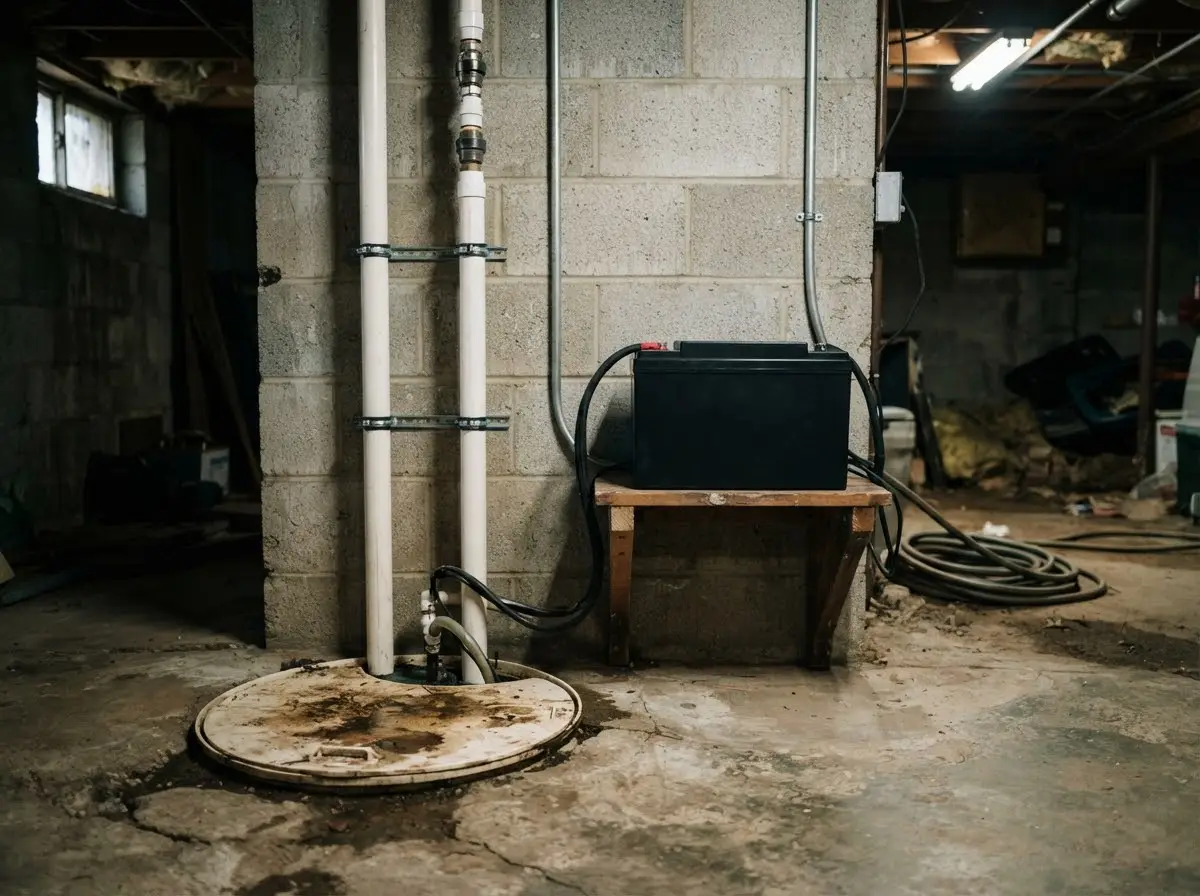
| Battery backup pump | A second pump in the same pit runs off a battery when the main pump loses power or can't keep up. | Most houses. Ask how long the battery runs at your pit's inflow and how the alarm warns you. |
| Water-powered backup | Uses pressure from the house water supply to pull water out of the pit, with no electricity. | Houses on public water only. On a private well, the well pump stops in an outage, and so does this backup. |
| Combination unit | A primary and a battery pump sold as one assembly with a shared controller. | A replacement where the pit has room and the old setup had no backup at all. |
Discharge line
Where the pumped water ends up
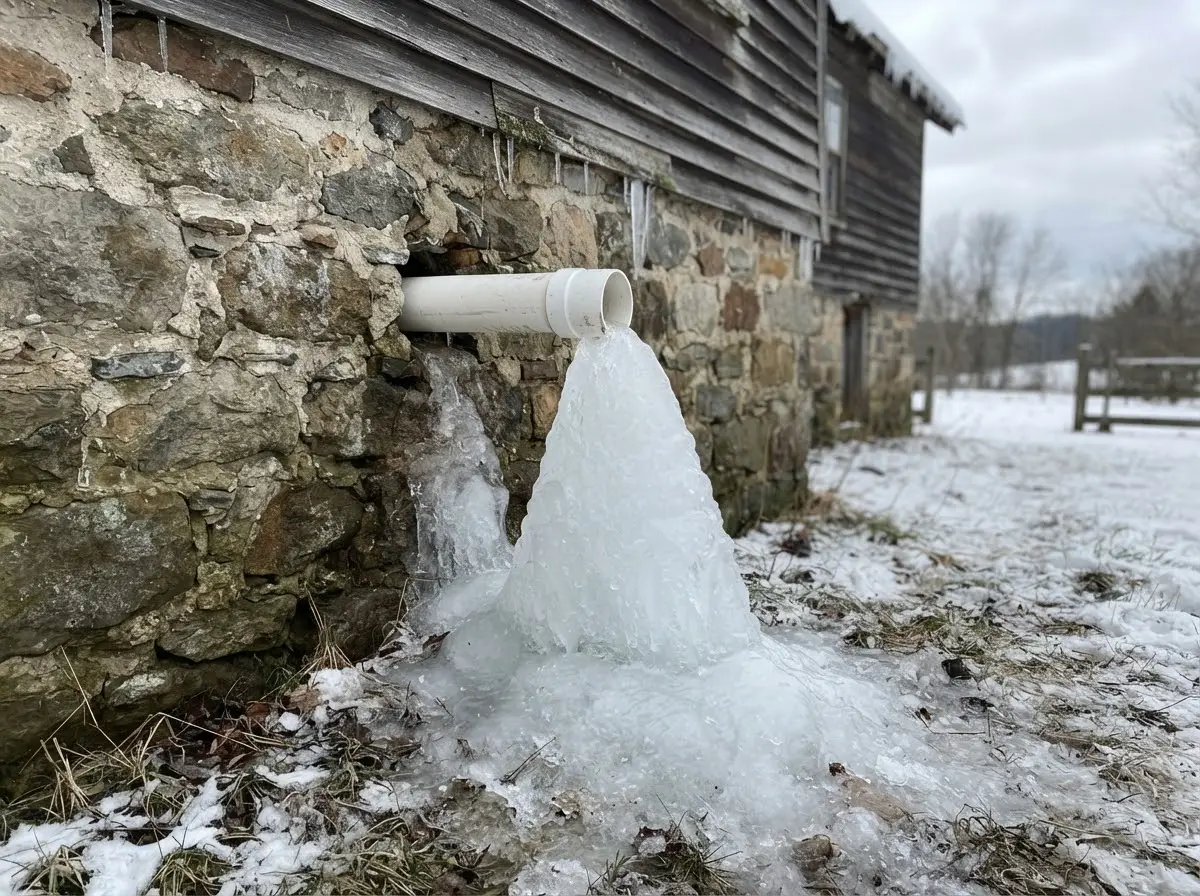
A pump that drops its water two feet from the foundation is pumping the same water twice. The discharge line should leave the house and end where the ground slopes away, far enough out that the water doesn't soak back down to the footing.
Three things go wrong with discharge lines here. They end at the foundation. They run onto a neighbor's yard or across a sidewalk, which can bring a complaint from the township. Or they freeze in a cold snap, so the pump runs against a blocked pipe. A freeze-relief fitting where the line leaves the wall lets water escape if the far end ices over, and a line pitched so it drains between cycles doesn't hold standing water to freeze.
Sump water belongs outside or in a storm drain where the municipality allows it, never in the sanitary sewer. Local sewer authorities ban that hookup; the Northampton, Bucks County Municipal Authority, for one, sets penalties of up to $1,000 a day. If an older pump was piped into a laundry sink or a sewer line, the replacement should be rerouted, and the written price should show that line.
No pit yet
A first sump in an older basement
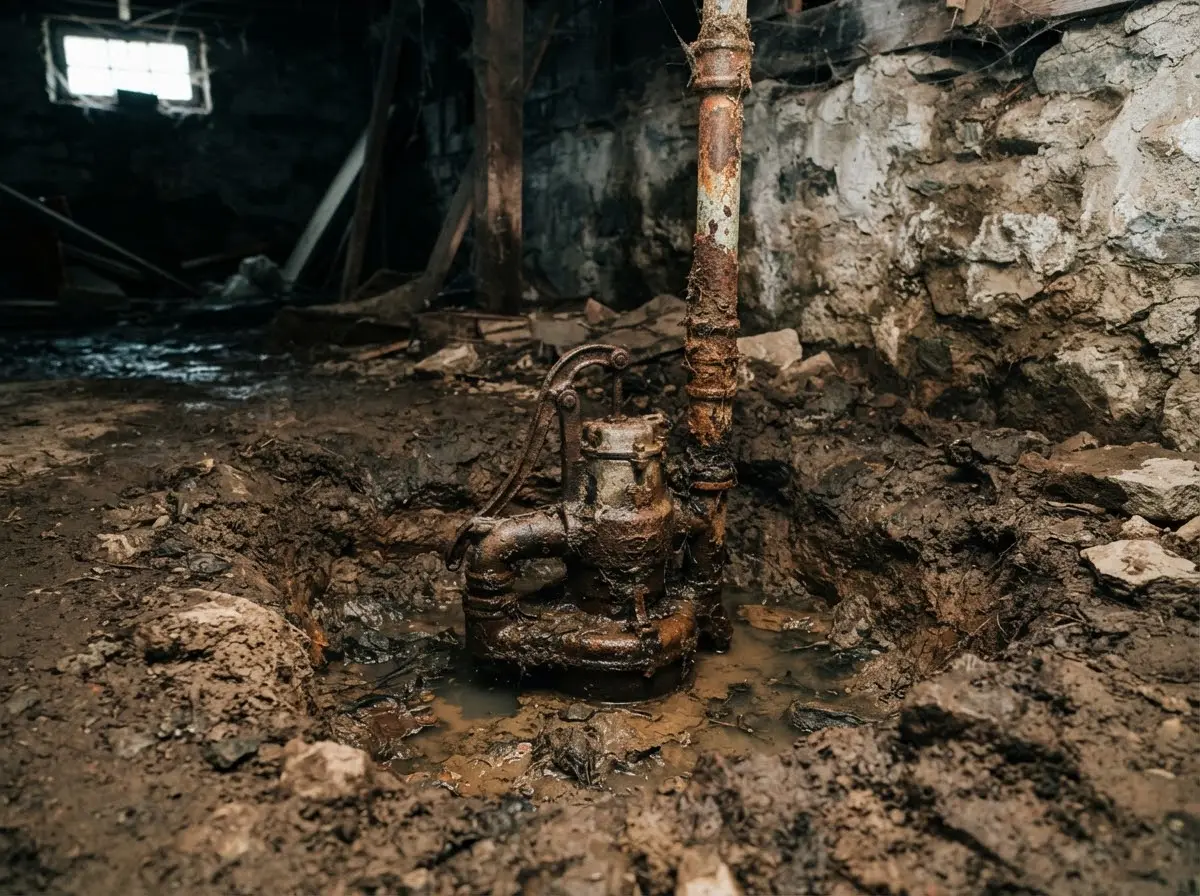
Plenty of older basements in the county have no pit at all. Adding one means cutting the slab at the low corner, digging out for a lined basin, and running power and a discharge line to it. A pit on its own collects only the water that reaches that corner. If water comes in along several walls, the pit is the end point of a perimeter drain system, and the two get priced together.
If the basement floods only in power outages, or the old pump is simply worn out, the pit you have may be fine. The visit sorts out which situation you're in before anything is cut.
Questions
Sump pump questions
What size pump does my basement need?
That comes from how fast water comes into the pit in a storm and how high the pump has to lift it to the discharge. A bigger pump isn't always better; one that empties a small pit in seconds cycles on and off more and wears out sooner. Ask what the sizing was based on.
Should the pump be cast iron or plastic?
Cast iron housings shed motor heat better and tend to stand up to heavy running, which matters in a pit that fills often. Plastic pumps are lighter and cheaper. The make, model and housing should be written on the price.
Does a new pump come with an alarm?
Not always. A high-water alarm in the pit costs little next to a flooded floor. Some sound in the house, and some send a phone alert. Ask for one on the price if you're ever away from home for a few days.
My pump only runs in spring. Is that normal?
Often, yes. Plenty of pits sit dry through summer and fill when the ground is saturated from snowmelt and spring rain. Lift the float by hand once before the wet season to make sure the pump still kicks on.
The first call
In the first minutes we'll ask what the pump is doing: humming, running nonstop, or nothing at all.
That sends the visit to the switch, the valve or the motor first, and the replacement and any backup are priced in writing before it goes in.